
From Talos to ChatGPT: Teaching AI Through Transmedia Storytelling
Exploring the possibilities of creativity and narrative in combination with the integration of GenAI tools and platforms.

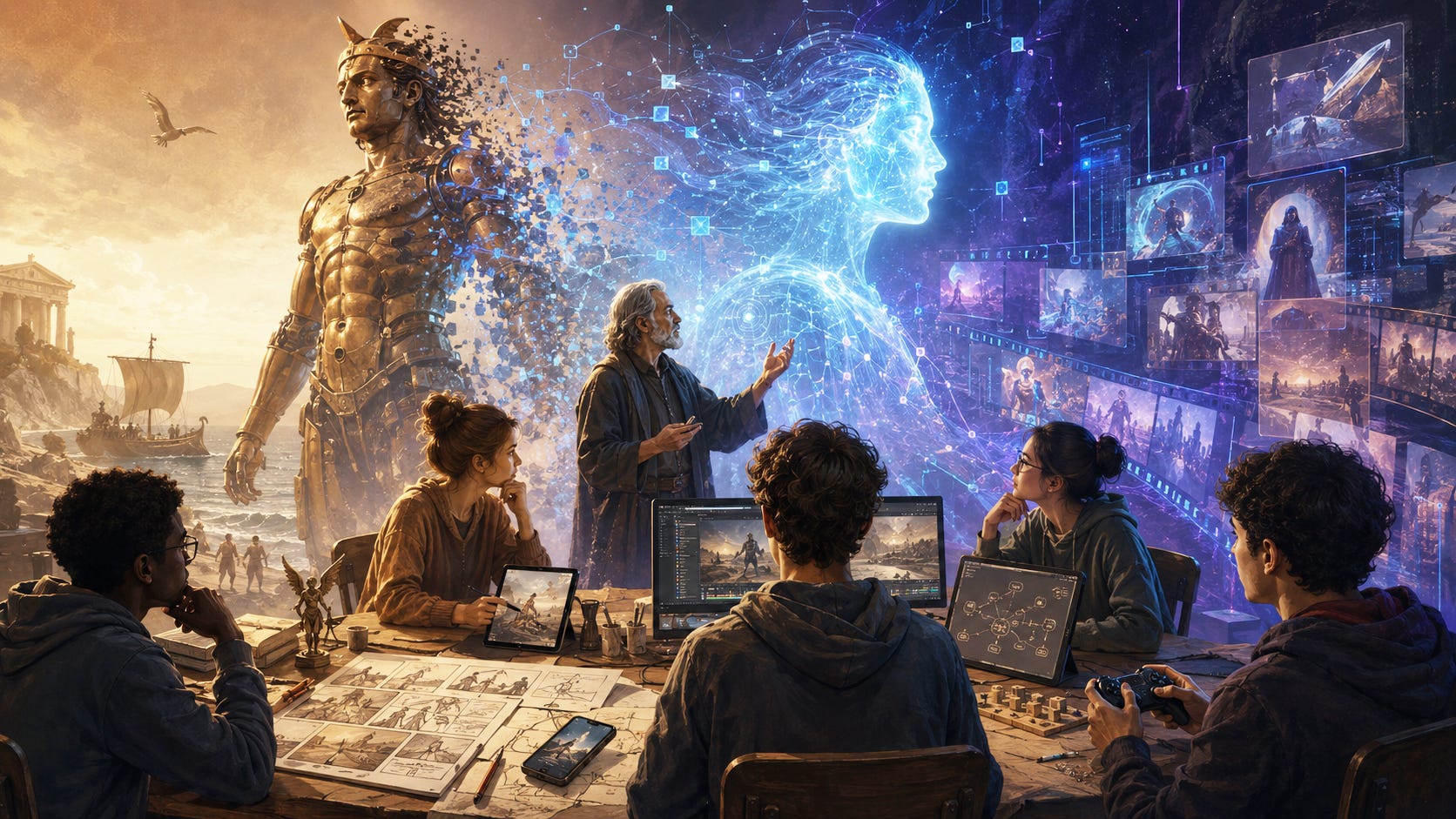
Last year, I wrote an essay about teaching how to work with GenAI through transmedia storytelling. The terrain continues to shift daily in terms of use cases, innovations, and the evolving and complex creative industry stance towards the use of GenAI in creative storytelling. Also, some of the tools mentioned below (e.g., Sora) no longer exist. Nonetheless, so much of the central argument feels more urgent than ever to me now: these tools aren’t going away and we all need ways to understand how GenAI can amplify our humanity rather than offloading what makes us human to intelligent machines.
This essay was originally published in The Journal for Research and Practice in College Teaching, Vol. 10 No. 2, in the special issue Classroom Applications of Generative AI: Practical Case Studies and Reflections. I am reprinting it here with attribution and a link to the original publication. Full link here: https://journals.uc.edu/index.php/jrpct/article/view/8791
From Talos to ChatGPT: Teaching AI Through Transmedia Storytelling
“When did you first learn about artificial intelligence?” I often ask the bright graduate and undergraduate students in my interactive media courses. AI has existed since at least the 1950s, but public consciousness of it has surged since 2022 with the emergence of generative AI (GenAI) tools like ChatGPT and Midjourney. Responses to this question typically fall into two categories: early exposure through science fiction and pop culture, or more recently, with the rise of Generative AI (GenAI). AI is frequently understood through the lens of science fiction. After all, “science fiction is not predictive; it is descriptive” (Le Guin, 2019, p. xvii) and such stories reflect our present and invent our futures. Today, conversations around AI often center on generative platforms like ChatGPT and Midjourney, even though other forms of AI have shaped our world for decades.
Moving From Industry to Academia
Before entering academia, I spent most of my career working in the video games industry. Game AI has long been used in digital creations, including enemy detection, dynamic difficulty adjustment, player matching, branching narratives, and non-player character behavior systems – and typically without much fanfare. Still, the fact of the matter is that making video games requires an innovator’s mindset. So much creation and discovery happen in the design, development, social interactions, and deployment of games.Because of their immersive and interactive nature, games also intersect with a range of other industries -- healthcare, finance, education, music -- so those of us in this space are accustomed to encountering cutting-edge technologies. When I first became aware of large language models (LLMs) in 2018, I sensed the world was on the cusp of transformation. I just didn’t realize how far-reaching that change would be.
AI Literacy: A Four-Pronged Approach
Competency with AI is becoming a central requirement of twenty-first century life, making AI literacy more critical than ever. Without a doubt, all industries, including media and creative industries, are poised for massive disruption. There’s much promise and potential – but only if we approach GenAI with focus and intention. In my teaching, I look for opportunities to engage students in dialogue about AI and its many implications, especially as it pertains to interactive experiences. We explore the ebb and flow of hype cycles, evaluate societal implications, and situate GenAI within broader cultural, economic, and technological shifts. Given the transformational nature of these innovations, I’ve developed a four-pronged approach to teaching about AI:
1. AI concepts and foundations
Students are introduced to the basics of AI, for example, from rules-based systems to algorithms and neural networks. In terms of GenAI, we focus on its use in automation, workflow augmentation, data transformation, creative assistance, and content development across storytelling, design, and coding.
2. Presentation of relevant use-cases
We regularly explore how AI is utilized for a range of purposes, with an emphasis on computational media, immersive experiences, and interactive entertainment. We also touch on intersecting industries (e.g., robotics, autonomous vehicles, healthcare) to better understand larger patterns and trends.
3. Hands-on projects
Hands-on projects of different sizes and scopes – all designed to introduce practical opportunities to explore computational co-creation. We explore how GenAI can be utilized for concept development and creation, with an emphasis on human expertise and agency. Humans are always the experts in the loop. Throughout these experiential learning opportunities, students are invited to assess whether GenAI was helpful or an impediment – or not needed.
4. Critical and ethical analysis
We continuously interrogate the implications of GenAI for the creative industries and society at large. Topics include data privacy, environmental sustainability, bias and dataset limitations, access and equity, and the future of labor. This reflective lens is embedded throughout the course.
Teaching AI and Computational Media
For my interactive media courses, students come from a variety of academic backgrounds and interests–production, business, computer science, film, marketing, design, finance, and fine art. The course explores the evolving media landscape, including how to tell stories across multiple devices, channels, and platforms. A central theme is convergence – when previously distinct elements (e.g., media, networks) combine to uncover new user experiences. With the ascendance of GenAI, changes in media ecosystem – and society as a whole – have accelerated at unprecedented rates.
For these reasons and more, I’ve incorporated AI-focused modules into my courses from the outset. My approach to teaching about AI changes and evolves from semester-to-semester. I now include several hands-on opportunities for students to experience AI first-hand. I also regularly incorporate real-time news and developments whenever possible to augment and inform our work and discussions.
Case Study: Transmedia World-Building with GenAI Group Assignment
For this specific assignment, students worked in groups to design a “transmedia story world” that could exist across multiple storytelling modes and platforms (e.g., games, streaming, virtual reality). Areas of focus included determining narrative arcs, interactive elements, characters, and how the story could unfold in various linear, analog, immersive, and interactive media formats. As part of this process, students decided how GenAI could be used to enhance their collaborations, whether in terms of brainstorming concepts, visual and audio asset creation, and developing channel and expansion strategies. Students worked together to create these worlds with a clear aesthetic and narrative identity. These projects serve as practice runs for understanding how GenAI may reshape creative collaboration and storytelling.
Everyone was encouraged to use generative AI (GenAI) for these purposes, with corresponding citation. Tools used included Midjourney, Hedra, ChatGPT, Ideogram, Suno, Canva, and Sora and they were used to create avatars, videos, animations, gameplay concepts, characters, songs, voices, world environments, and in-world artifacts to bring their concepts to life.
On the last day of class, each group presented their transmedia world visions. Students were asked toprovide an overview of the transmedia story world, including its lore, geography, culture, and politics. They also introduced key characters and described their relationships to each other. Ideas for interactive and linear media adaptations were presented as well as ideas around channel strategy and expansion. Finally, each group was asked to explain how they incorporated GenAI into their workflow and creative processes.
What surprised me? The impressive range of creativity and the degree to which students utilized GenAI to create assets -- concept art, interactive demonstrations, and music. The integration of GenAI in combination with human creativity sparked something new. As Manovich and Arielli (2023) remind us:
Our engagement with technology expands and modifies how we create and ultimately shapes our cultural evolution…Machines could learn to produce aesthetic artifacts and generate new creative styles and genres...even be able to create new “cultures” - that is, to create genuinely new types of art and aesthetics (p. 12).
Looking ahead, I aim to explore new and experimental genres, perhaps focusing on integrating GenAI more thoroughly into the transmedia experiences themselves, for example in the form of adaptive storytelling.

Final Thoughts
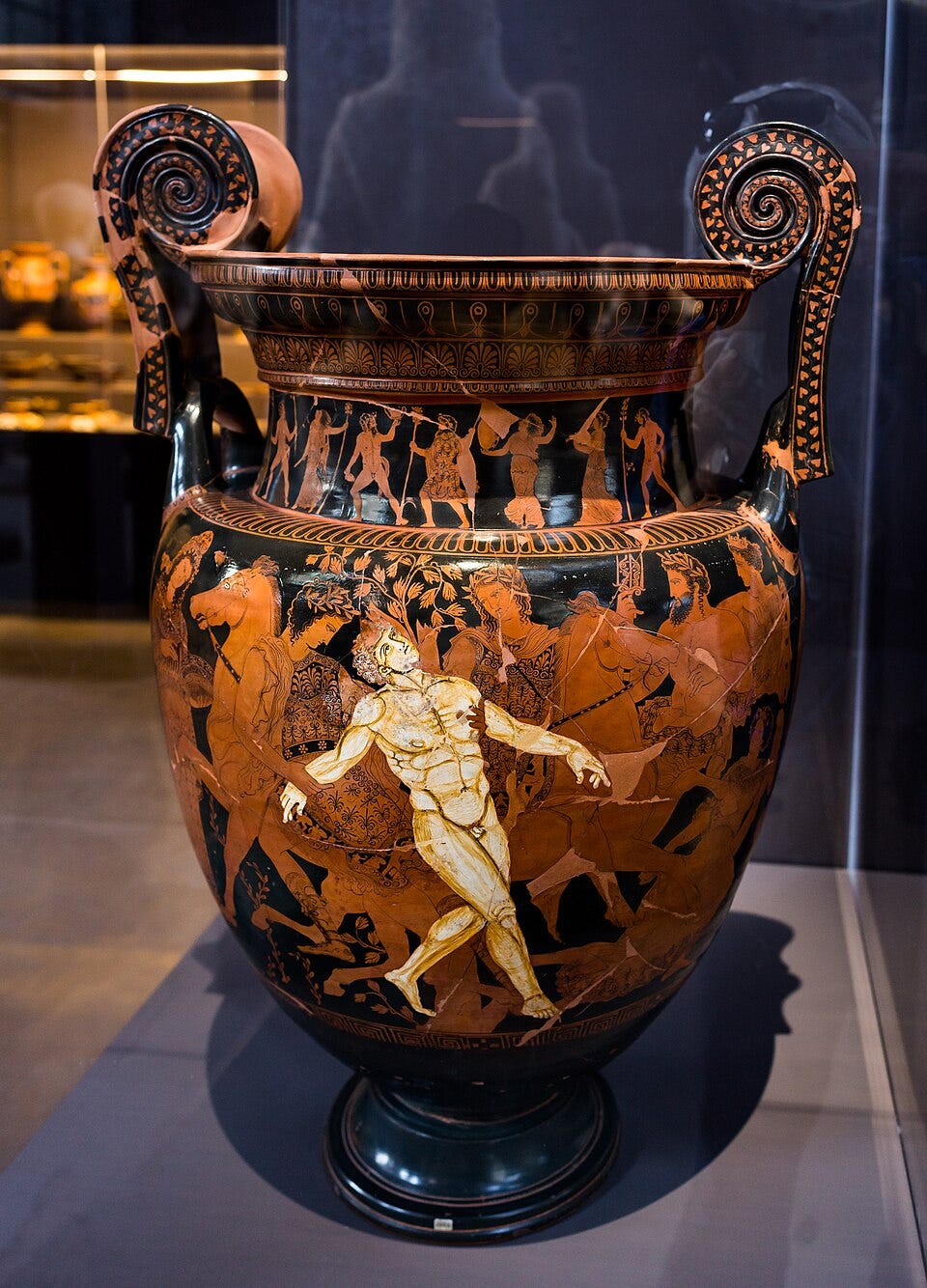
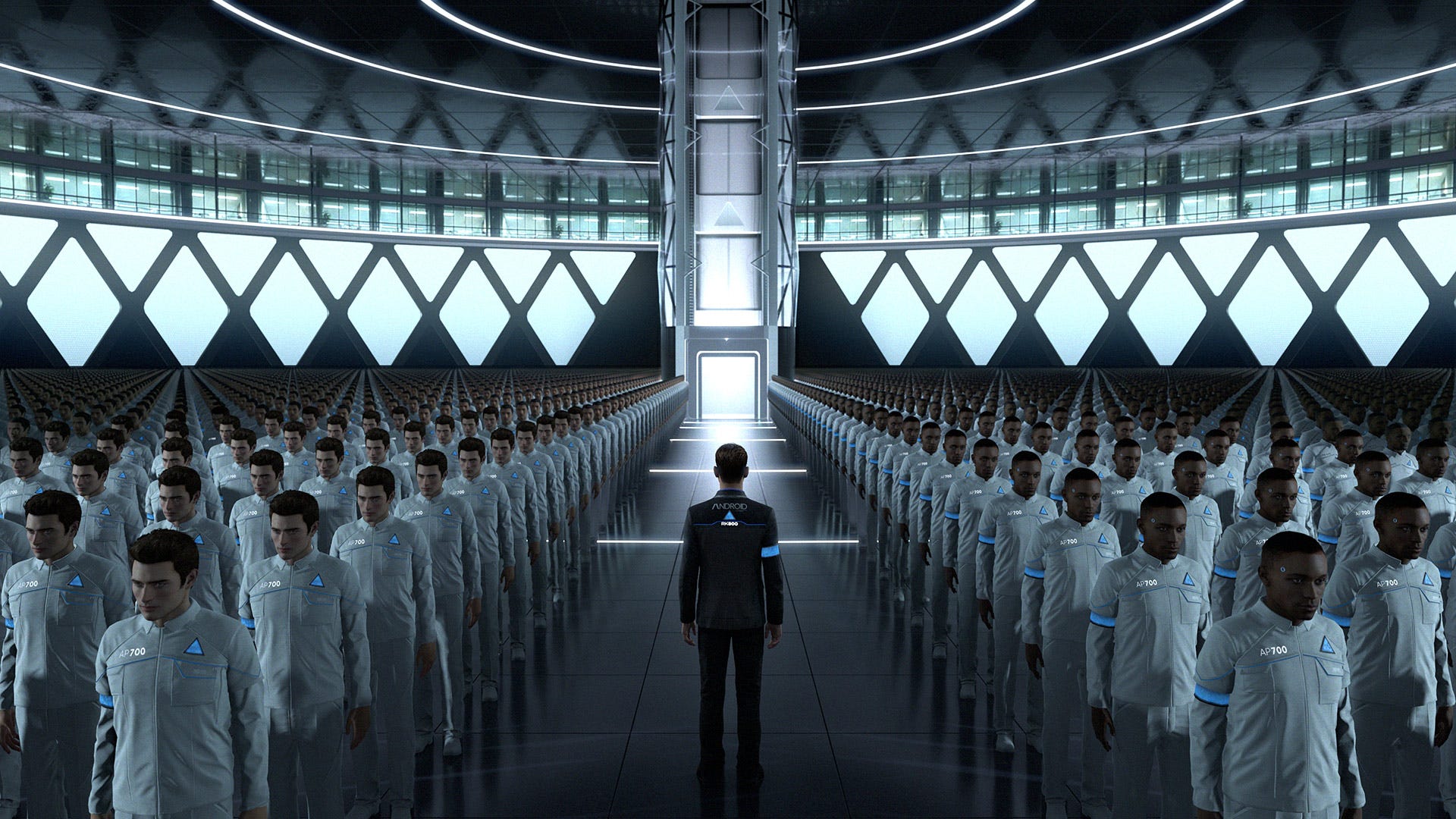
Long before the emergence of GenAI, machine intelligence has captivated our collective imaginations in one form or another throughout history. Sweeping visions of mechanical automation and computational intelligence have appeared in our stories and future imaginings. Consider Talos, the bronze guardian of Crete from Greek mythology and Aristotle’s musings on automata (self-moving tools), two of many examples, as precursors to twenty-first century manifestations of machine intelligence and automation. Contemporary references to AI abound in film, television, and games – Star Trek, ExMachina, and Her are popular cultural touchstones. The action-adventure game Detroit: Become Human and the anthology series Black Mirror also explore far-out dystopian AI themes of consciousness transfer, surveillance, and artificial companionship.
In what could be a quote from its own episode of Black Mirror, OpenAI’s Sam Altman declared, “In some sense, ChatGPT is already more powerful than any human who has ever lived” (Altman, 2025, para. 3). Now that reality seems to be catching up to the world of science fiction, integrating AI literacy into teaching and learning has never been more urgent. I can’t guarantee what the immediate future will look like in terms of creative possibilities and new experiential affordances. Through these explorations, I aim to foster AI competency, critical thinking, and literacy in productive, actionable, and meaningful ways.
References
Altman, S. (2025, June 10). The gentle singularity [Blog post]. https://blog.samaltman.com/the-gen-tle-singularity
Aristotle. (2013). Politics (C. Lord, Trans., 2nd ed.). University of Chicago Press.
Le Guin, U. K. (2019). The Left Hand of Darkness (50th anniversary ed.). Ace.
Manovich, L., & Arielli, N. (2023). Artificial aesthetics: Generative AI, art and visual media. https://manovich.net/content/04-projects/178-artificial-aesthetics/manovich_and_arielli.artificial_aesthetics.all_chapters_final.pdf